




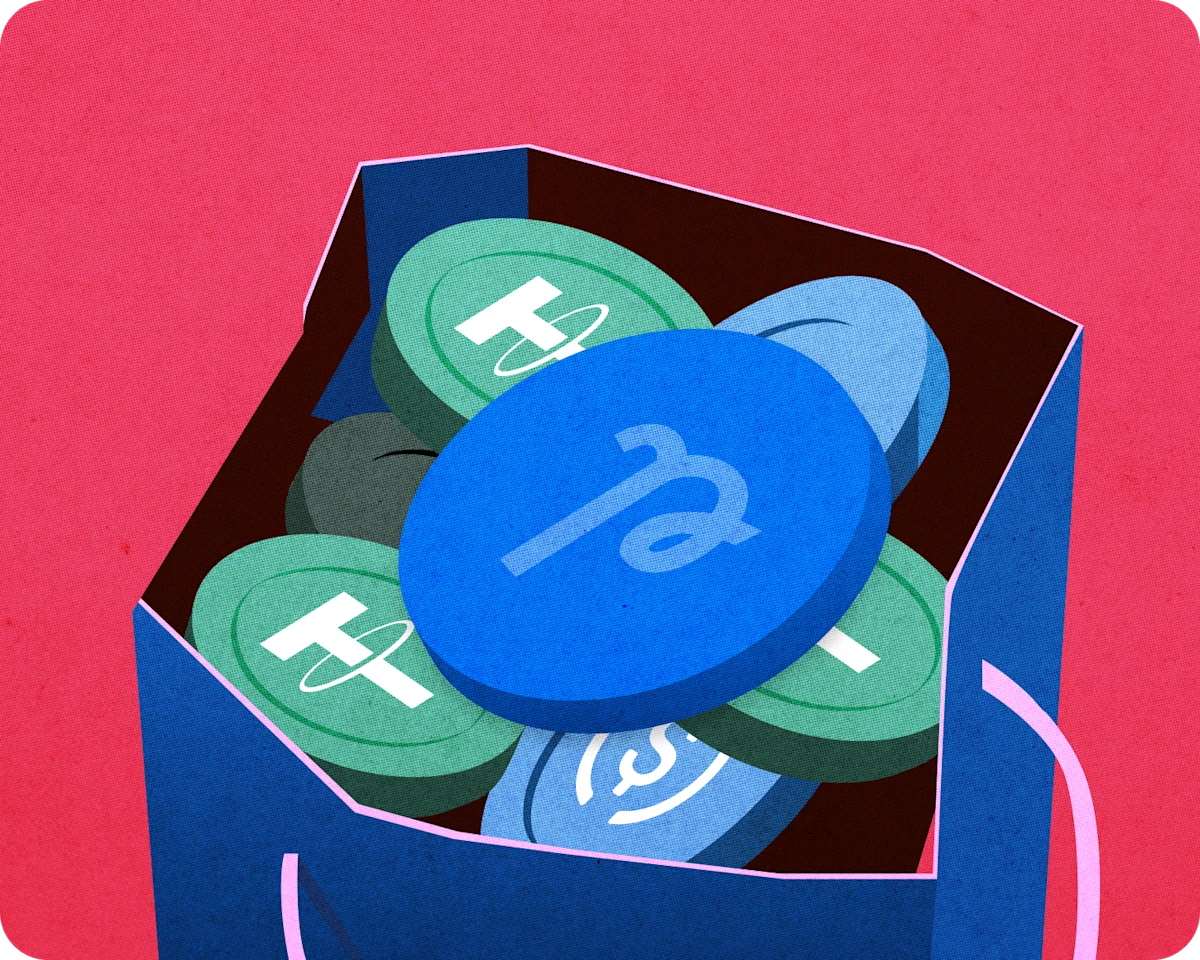
You don't have to be a developer or a trader. You just need USDC and 30 days.
The Problem Nobody Talks About
Every time someone sends crypto to a PAJ address and receives naira in their bank account, something has to fund that naira before the stablecoin side of the transaction is converted and returned.
Think about it. When you send USDC and naira lands in someone's GTB account in 20 seconds, where did that naira come from?
It came from a standing balance that PAJ maintains specifically to fund payouts in real time. Without that balance, no payout happens. The crypto arrives, but there is nothing to pay out with until the conversion cycle completes, which takes days, not seconds.
That standing balance is working capital. And working capital has to come from somewhere.
PAJ's answer is the Liquidity Pool, and it is now open to the public.
What the PAJ Liquidity Pool Actually Is
The PAJ Liquidity Pool is a way for anyone to contribute USDC to the pool that funds PAJ's naira payouts and earn a return for doing it.
Here is how it works in plain terms:
You stake USDC into the pool. PAJ uses that USDC to maintain the naira balance it needs to process payouts instantly. As PAJ processes transactions, it earns a spread on each one. A portion of that spread comes back to you as interest.
The terms are straightforward:
- Yield: 1.25% per month, compounded daily, which works out to an effective 16.4% per year
- Minimum contribution: 50 USDC
- Lock period: 30 days from the day you contribute
- After 30 days: You can withdraw your principal and all accrued interest at any time
That is it. No trading. No liquidity provision on a DEX. No impermanent loss. No managing price ranges. You put USDC in, it funds real transactions, and you earn from the spread those transactions generate.
Why the Yield Is Real
This is the question worth asking, and the PAJ team has been unusually transparent about the answer.
The yield does not come from thin air or from a token with no backing. It comes from the economics of the transactions PAJ processes.
Every time PAJ funds a naira payout, it earns approximately 1% on that transaction. The USDC that came in from the deposit accumulates on one side while the naira payout goes out on the other. PAJ converts the stablecoin back to naira to replenish the pool, and that cycle typically completes in about three days.
The math: at 1% per cycle and roughly 100 cycles per year (accounting for weekends when naira rails don't settle), PAJ earns about 100% annually on deployed capital. Paying out 16.4% to pool contributors and keeping the rest as operating margin is sustainable; the break-even point is just 16.4 cycles per year, and the system is built for 100.
In other words: the margin is approximately six times the interest obligation. Cycle time would have to slow from 3 days to nearly 3 weeks before the pool stopped paying for itself.
According to PAJ's own documentation :
"The interesting question is never the rate; it is what has to remain true for the rate to be payable."
Their answer, capital must turn roughly once every three days and stay small enough that all of it turns, is honest and specific, if you ask me.
Why the Pool Is Capped
The pool is not open-ended. There is a maximum size, and that maximum is deliberate.
Idle capital earns 16.4% while doing nothing productive. If the pool grows larger than the transaction volume it exists to fund, PAJ ends up paying interest on capital that is sitting unused, which is a guaranteed way to lose money.
So the cap is sized to match actual settlement demand. It rises only when transaction volume has already grown enough to put the additional capital to work. You will not be contributing to a pool that is larger than it needs to be.
This is a protection for contributors as much as it is a financial discipline for PAJ. A pool sized to demand means full utilisation, and full utilisation is what makes a fixed return safe to offer at all.
What You Should Know Before Contributing
PAJ's whitepaper is unusually honest about the limits of this model. Here is what they say directly:
The model depends on sustained transaction volume. The spread PAJ earns is variable. The interest it pays is fixed. If settlement volume drops significantly and capital sits idle, the economics change. PAJ's control is the cap; they can stop accepting new contributions if conditions change.
Withdrawals are on demand after 30 days, but the money is always deployed. At any moment, most of the pool's capital is mid-cycle: converted into naira and being used to fund payouts, or accumulated as stablecoin waiting to be converted back. If a large number of contributors asked to withdraw at the same time, PAJ would need to wait for active cycles to complete before returning those funds. This is disclosed, not hidden.
Cycle time is a target, not yet a published metric. PAJ builds for a 3-day cycle. They do not yet publish realised cycle time or utilisation data. The arithmetic in this article reflects how the model is designed to work, not a historical performance record.
Who This Is For
If you hold USDC and want it to work harder than it does sitting in a wallet: the PAJ Liquidity Pool gives you a yield tied to real economic activity, not speculation.
If you believe in what PAJ is building: contributing to the pool is a direct way to participate in the infrastructure behind it. Every payout PAJ processes runs through the capital this pool provides.
If you have been doing P2P and understand the problem PAJ solves: you now have a way to be on the other side of the equation. Not just a user of the infrastructure, but a contributor to it.
The minimum is 50 USDC. The return is 16.4% effective annual yield. The lock is 30 days.
The Bigger Picture
PAJ's liquidity pool is not a standalone investment product. It is the funding layer for a payments protocol that has processed over 60,000 transactions from over 3,000 addresses on Solana mainnet.
When you contribute to the pool, your USDC is funding the naira payouts that remote workers, small businesses, and everyday Nigerians receive when they convert their crypto through PAJ. The yield you earn is a share of the spread generated by those real transactions.
That is what makes this different from most yield products in the crypto space. There is a real economic activity underneath it: transactions that would happen anyway, people who need to convert crypto to naira today, and the pool is the infrastructure that makes those transactions possible at the speed PAJ promises.
The capital has to come from somewhere. Now it can come from you.
PAJ is a Solana-native payments protocol built within the SuperteamNG ecosystem. The liquidity pool is accessible through the PAJ app. Minimum contribution: 50 USDC. Lock period: 30 days.
@paj_cash | paj.cash